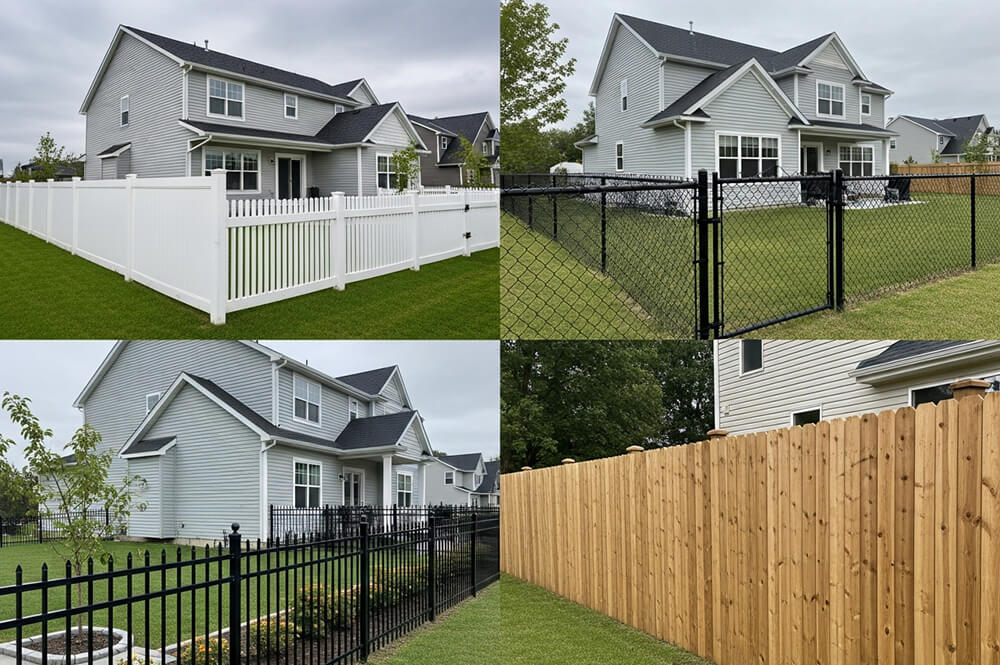

Security fencing for homes is one of the most effective ways to protect your property, discourage intruders and create a clear barrier between public and private space. A well-designed home security fence does much more than mark boundaries: it works together with lighting, gates and landscaping to create a safer, more controlled environment for your family.
Before investing, it’s important to understand what security fencing is, what it can and cannot do, which materials make sense for your situation and how to keep your fence strong over time.
What security fencing for homes is
Security fencing for homes is any perimeter fence specifically designed to make unauthorized access more difficult, less attractive or more noticeable. Unlike purely decorative fences, residential security fencing focuses on:
- Height and structure that are hard to climb
- Layout that reduces hiding spots and blind corners
- Gates and latches that are difficult to force or open accidentally
In practical terms, a security fence is part physical barrier, part psychological deterrent: it signals that the property is protected and that entering without permission will take effort and attract attention.
What security fencing for homes is used for
Well-planned security fencing for homes serves several purposes at once:
- Deterrence: intruders generally prefer easy targets with weak or no fencing.
- Delay: even if someone attempts to enter, a robust fence slows them enough for neighbors, cameras or alarms to react.
- Boundary control: clearly defines where public access ends and private property begins.
- Safety: keeps children and pets inside the yard and away from traffic or hazards.
- Privacy (depending on style): limits how much outsiders can see into your home and outdoor living areas.
The best residential security fence supports your broader security strategy instead of trying to replace other measures like lighting or cameras.
Main benefits of security fencing for homes
Increased peace of mind
Knowing your yard is fenced with a secure perimeter reduces the feeling of vulnerability, especially at night or when the house is empty.
Better property control
A security fence allows you to:
- Channel all access through gates
- Lock off side yards, back alleys or areas behind garages
- Prevent casual trespassing and reduce loitering along the property line
Added value and curb appeal
Modern security fencing for homes doesn’t have to look industrial. Vinyl, aluminum and well-designed wood fences can enhance the appearance of your property while still being hard to climb or break.
Types of security fencing for homes
Privacy security fences
These are solid or nearly solid fences, often in:
- Vinyl: low maintenance, smooth surface (harder to climb), available in tall heights.
- Wood: classic look; can be built as full privacy but must be carefully designed to avoid easy footholds.
Privacy fences are ideal when you want both security and visual screening, especially for backyards and side yards.
Ornamental security fences
Ornamental aluminum or steel fences offer:
- Strong vertical pickets that are difficult to climb
- Decorative yet sharp or pointed tops (within local code) to discourage scaling
- Good visibility, which helps with surveillance and lighting
These are common in front yards, around pools and along visible street fronts where aesthetics are important.
Chain link with security enhancements
Standard chain link by itself is not the most secure option because it can be climbed. However, security fencing for homes based on chain link improves when combined with:
- Greater height
- Smaller mesh size to reduce footholds
- Privacy slats or panels
- Stronger framework and secure gates
This is often a cost-effective solution for large yards or side/rear perimeters where appearance is less critical.
Materials used in security fencing for homes
When selecting materials for security fencing for homes, consider:
- Vinyl
- Low maintenance and resistant to rot and insects
- Smooth surfaces with few footholds
- Excellent for privacy fences
- Low maintenance and resistant to rot and insects
- Aluminum
- Durable and corrosion-resistant
- Great for ornamental security fences with vertical pickets
- Works well around pools and front yards
- Durable and corrosion-resistant
- Wood
- Warm, natural appearance
- Can provide full privacy
- Requires regular maintenance to stay strong and secure
- Warm, natural appearance
- Chain link
- Economical and sturdy
- Best when enhanced for security or used in less visible areas
- Economical and sturdy
The right material depends on your priorities: looks, privacy, maintenance, budget or a balance of all.
When to invest in security fencing for homes
It makes sense to consider security fencing for homes when:
- You live in an area with frequent trespassing, theft or vandalism.
- Your property has easy access points (alleys, wooded areas, paths).
- You have valuable outdoor assets (vehicles, equipment, outdoor kitchens).
- You want to create a safe play area for children and pets.
In many New Jersey neighborhoods, for example, homeowners choose a combination: a more ornamental aluminum or vinyl fence along the street and a higher privacy fence along the sides and rear of the property.
Common problems and how to avoid them
Even a strong fence can underperform if poorly planned or installed.
Frequent issues include:
- Fence too low: a fence that is easy to step or climb over loses much of its security value.
- Weak gates and latches: gates are the most used and most attacked parts of the fence; cheap hardware fails quickly.
- Poor layout: creating hidden corners or areas that are hard to see encourages intruders.
- Lack of maintenance: rotten posts, loose boards or sagging panels create easy access points.
To avoid these problems:
- Match height to your security goals and local regulations.
- Invest in heavy-duty hinges, latches and locks.
- Combine fencing with lighting and, if possible, cameras covering key sections.
- Schedule regular inspections and repairs, especially after storms.
Maintenance tips for security fencing for homes
Keeping security fencing for homes in good condition is as important as the initial installation.
Basic tips:
- Inspect annually: look for rust, cracks, loose posts or damaged pickets.
- Keep vegetation under control: overgrown shrubs can hide weak spots and create footholds.
- Touch up paint or coatings: prevents corrosion on metal fences and extends lifespan.
- Maintain gates: adjust hinges and latches so they close and lock smoothly every time.
Proper maintenance keeps your security fence strong and reduces long-term repair costs.
Cost factors for residential security fencing
The cost of security fencing for homes depends on:
- Total length of the perimeter
- Height of the fence
- Material (vinyl and ornamental aluminum often cost more than basic chain link)
- Terrain complexity (slopes, rocks, tree roots, existing structures)
- Number and type of gates (single, double, driveway, automated)
- Professional installation vs partial DIY
Rather than chasing the lowest quote, it’s wiser to look at value: lifespan, maintenance needs, warranty, and how well the fence actually meets your security objectives.
Professional recommendations and the role of local experts
Planning security fencing demands more than choosing a pretty panel from a catalog. A professional fence contractor can:
- Evaluate your property layout and risk points
- Recommend the best combination of height, material and style
- Ensure compliance with local codes and HOA rules
- Install posts and gates correctly so the fence stays firm for years
For homeowners in New Jersey, companies like Fence Pro By Bruno are a strong reference. They specialize in installation and repair of fences across New Jersey, offering professional solutions in vinyl fence, wood fence, chain link, aluminum, pool fencing and more. Their focus on quality, experience and customer service helps homeowners design security fencing that actually works, not just looks secure.
FAQs about security fencing for homes
Is security fencing for homes always tall and industrial-looking?
Not necessarily. Many modern vinyl and aluminum systems provide strong security in designs that match residential architecture and neighborhood standards.
Which is better for security: privacy or open-view fencing?
It depends. Privacy fencing blocks views into your yard, while open-view fences (like aluminum) make it easier to see suspicious activity from inside and outside. Often a mix of both works best.
Do I need a security fence if I already have cameras and alarms?
Yes, physical barriers and electronic systems complement each other. A fence can deter and delay, while cameras and alarms help detect and respond.
Can I improve the security of an existing fence?
Often yes—by adding height where allowed, upgrading gates and locks, reinforcing weak sections and improving lighting and visibility.


